Balancing Clinics and Commitments: How to Plan Your Semester as a Dancer
This comprehensive guide helps high school dancers navigate the challenging balance between college recruitment clinics, team commitments, and academic responsibilities. Learn practical strategies for planning your semester, communicating professionally with college coaches when conflicts arise, and choosing quality over quantity in your clinic attendance while still enjoying your current dance season.

The start of a new semester can feel like opening a fresh notebook—full of possibility, but also overwhelming when you start writing in all the dates. Between competitions, required rehearsals, school events, and dance clinics, it can feel like there simply aren’t enough hours in the day.
Here’s the truth: you don’t need to be everywhere to make an impact. With a little planning, honest communication, and a balanced approach, you can chase your college dance goals without missing out on the memories that make high school special.
Map Out Your Semester
Start by laying everything out in one place. Grab your calendar—whether it’s Google Calendar, Notion, or a paper planner—and write down:
Competition weekends
Studio or team rehearsals
School commitments (pep rallies, football games, homecoming, etc.)
College clinics you’re interested in
💡 Pro Tip: Color-code your calendar (ex. blue = school, pink = studio, green = clinics). This helps you see conflicts early and notice when one week is heavier than another.
Example: If you see that your state competition falls the same weekend as a clinic, you won’t scramble last minute—you can plan ahead and communicate with the coach.
Choose Quality Over Quantity
It’s tempting to sign up for every clinic you can find, but more isn’t always better. Instead:
Focus on the schools you’re genuinely interested in.
Pick clinics where you can give 100% rather than rushing from one event to the next.
Remember: showing up prepared and engaged at three clinics is more impressive than spreading yourself too thin at ten.
Example: If you’re torn between two clinics on the same day, pick the program that best aligns with your goals, academic standing and genuine connection to the program.
Communicate with Coaches
One of the biggest mistakes dancers make is staying silent when they can’t attend a clinic. Coaches understand dancers are juggling competitions, rehearsals, and school—they’ve been there themselves. What matters most is showing you’re responsible and respectful.
Here’s how you can do it:
Sample Email to a Coach
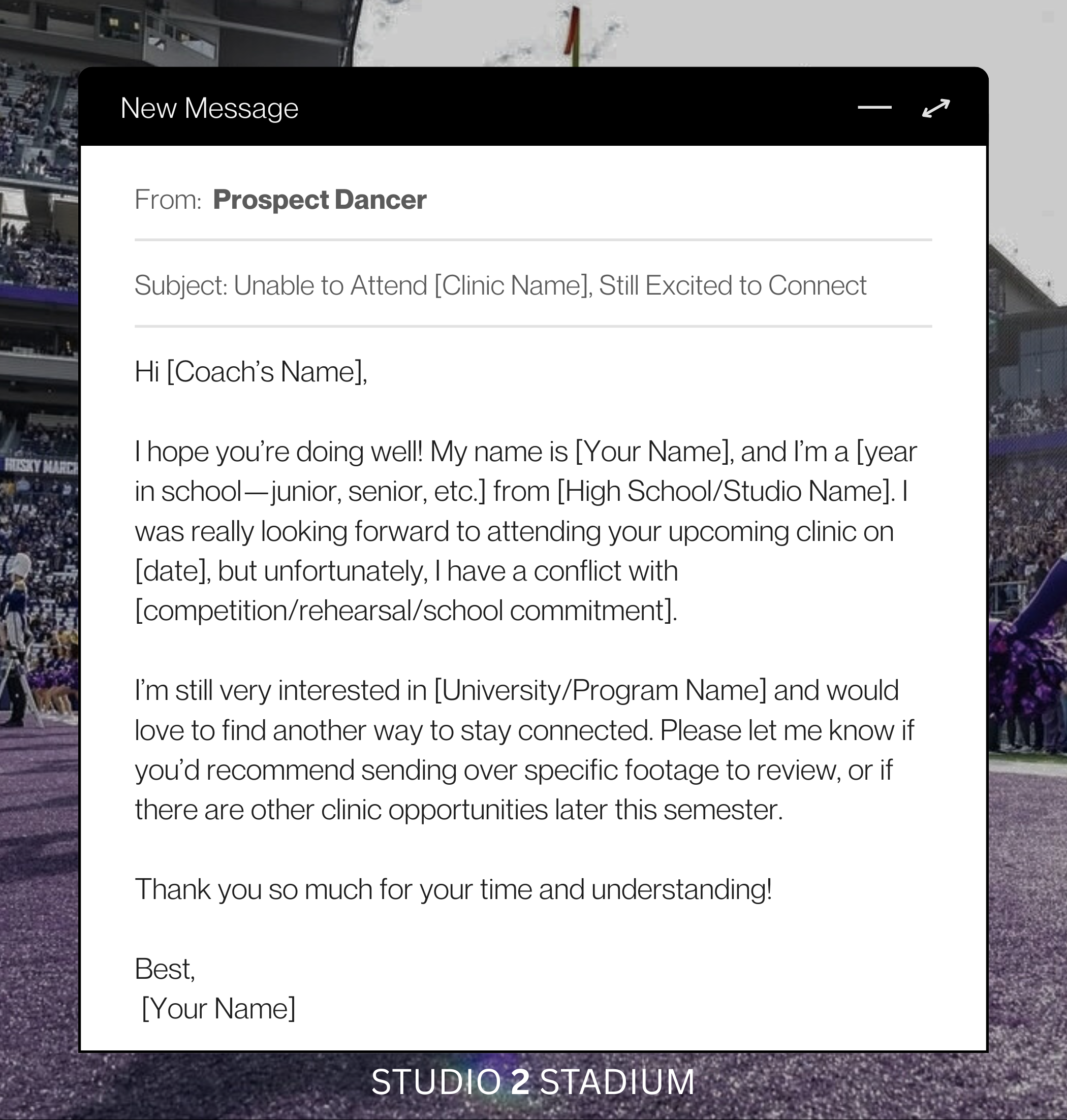
This short email shows:
You’re organized (you noticed the conflict early).
You respect your current commitments.
You’re genuinely interested in their program and taking initiative.
Don’t Forget the Season You’re In
While planning ahead is important, so is living in the moment. You only get one senior year, one junior year, one sophomore/freshmen year. Don’t skip every football game, homecoming, or studio bonding night just to squeeze in “one more clinic.”
Coaches value dancers who are loyal to their teams and communities. If you’re the kind of dancer who shows up for your high school or studio teammates, that says a lot about how you’ll show up for a college team.
Example: Choosing to perform at your studio competition instead of rushing to a last-minute clinic doesn’t hurt your recruiting journey. It shows you’re dedicated to your team and committed to the success of your current program.
Balance > Burnout
At the end of the day, balance is what makes you sustainable as a dancer and as a person. If you try to do it all, you’ll eventually burn out, and coaches can sense that. Instead, plan in a way that leaves space for rest, recovery, and joy.
Because here’s the truth: the dancers who thrive in college aren’t just the most talented—they’re the ones who know how to manage their time, take care of themselves, and stay consistent.
This semester, challenge yourself to do two things:
Plan ahead so you’re not caught off guard by conflicts.
Give yourself permission to be present and enjoy your current season.
When you communicate with coaches, choose quality over quantity, and prioritize balance, you not only move closer to your college dance goals—you also build skills that will carry you through college and beyond.