How to Raise a Curious, Self-Driven Learner — Especially If Your Teen’s Life Revolves Around Dance
Discover practical strategies to nurture curiosity in teen dancers and help them grow both in and out of the studio. Learn how modeling curiosity, asking thoughtful questions, and turning mistakes into learning opportunities can support your dancer’s confidence, motivation, and lifelong learning skills. Perfect for parents looking to guide their teens without adding stress or pressure.
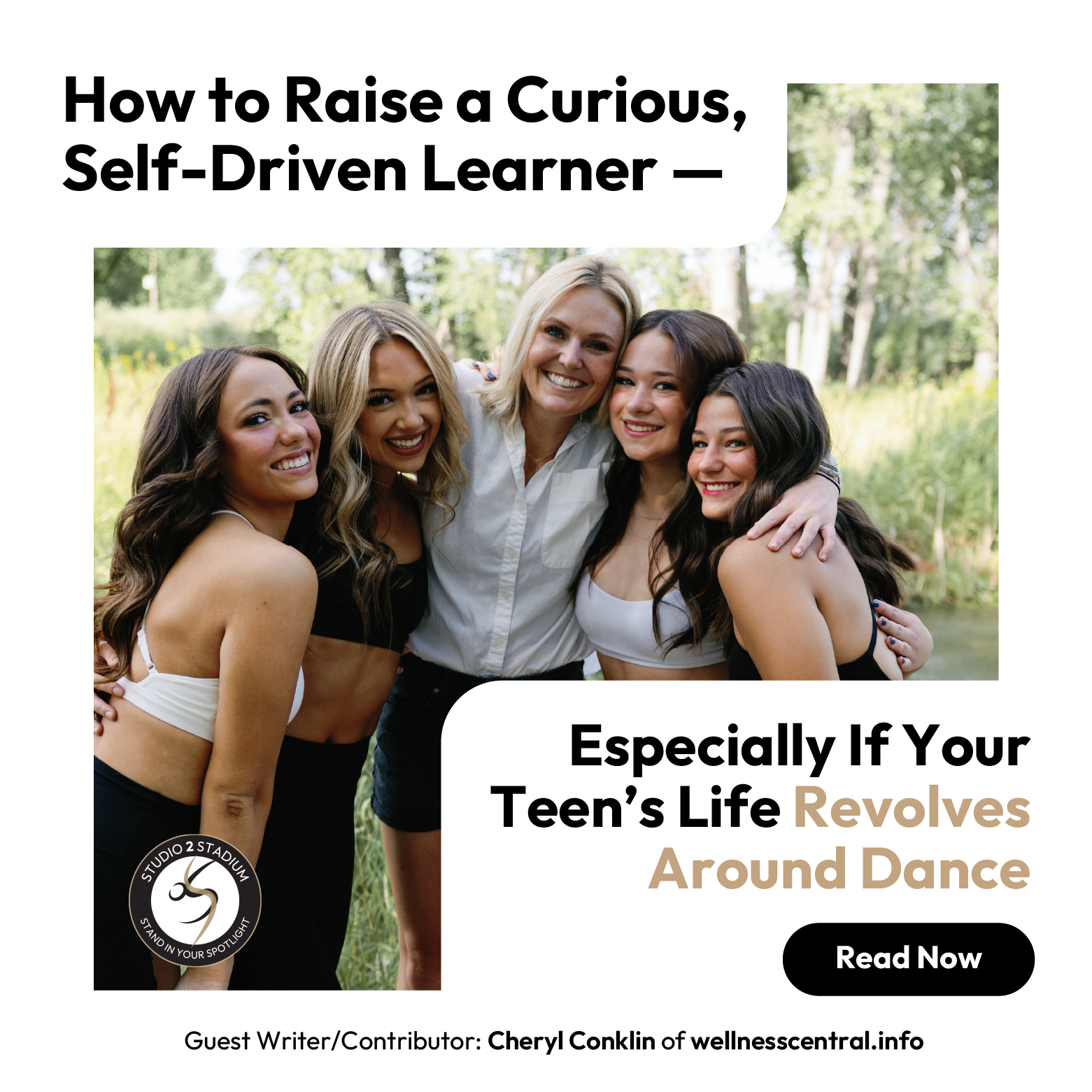
Guest writer: Cheryl Conklin of wellnesscentral.info
If you’re parenting a high school dancer, you already know the drive isn’t the problem — the challenge is preserving it in the right places. As rehearsals pile up, schedules intensify, and performances demand perfection, your teen’s mind can start shrinking around technique sheets and to-do lists. But at the heart of dance — and any lifelong learning path — is curiosity. And if your dancer’s curiosity stays lit, they don’t just grow in the studio. They grow into a person who seeks, questions, adjusts, and shows up ready to learn — no matter the arena. Here’s how to support that, one subtle habit at a time.
Model Curiosity Out Loud
Teens absorb more from what you model than what you mandate. When they hear you say, “I’ve never thought about it that way,” or “I don’t know, but let’s find out,” you make space for wonder — and for not knowing. You don’t need to be a dance expert to model lifelong learning. Whether you’re watching a documentary, tackling a project, or navigating a tough parenting moment, you can invite curiosity by exploring unknowns together. Curiosity isn’t about answers — it’s about the emotional stance of staying open.
Ask Questions That Stretch, Not Close
Instead of asking “How was rehearsal?” try “What’s something that caught you off guard today?” or “If you choreographed that section, how would it look different?” Questions like these don’t fish for data — they invite your teen into authorship. The more they examine, the more they own. And when you turn why‑and‑how questions into conversations, you give them a chance to clarify their own thoughts — not just react to yours.
Find Micro-Moments That Still Count
Busy doesn’t mean absent — it just means intentionality matters more. If your teen’s dance schedule stacks on top of your own, look for windows that already exist: the ride to rehearsal, the few minutes after dinner, or the wind-down moment before bed. Even five minutes of conversation, journaling, or reading together can create a small but powerful habit loop. The goal isn’t to do everything — it’s to make learning moments part of your rhythm. Curiosity grows when your teen feels you’re available, not because you said the right thing — but because you showed up when it counted.
Treat Mistakes as Fuel, Not Failure
If your dancer comes home after a rough class, it’s tempting to smooth things over or reframe it immediately. But the best support often sounds like, “That sounds tough. What did you learn about yourself today?” Teens become curious when they realize that errors aren’t end points — they’re openings. Many of the biggest breakthroughs in technique (and mindset) come when a dancer leans in after a mistake. Encourage them to believe that mistakes as springboards to deeper discovery are part of the path — not signs they’ve strayed from it.
Focus on Goals That Motivate, Not Perform
A self-driven teen doesn’t just chase scores — they pursue growth. And growth isn’t linear. It’s often sparked by setting weird, personal goals like “Learn this phrase in reverse” or “Find one new way to transition from floor to standing.” Help your dancer name goals that aren’t just about being good, but about getting curious with themselves. The sweet spot is when they’re chasing improvement because they want it — not because someone’s watching. Show them how to help your teen name hopes and next steps instead of measuring them against a ladder.
Bring Curiosity Into Their Real World
Learning sticks when it’s embedded in context. If your dancer is fascinated by choreography, find ways to connect that interest to architecture, storytelling, even geometry. Ask them to teach you how timing in music affects how movement lands emotionally. Encourage them to explore how emotions change when a phrase is done softly vs. sharply. The key is to connect curiosity to everyday dance challenges, so they see learning not as something separate — but as something they already live.
Help Them Self-Regulate, Not Just Self-Motivate
Self-motivation without self-regulation is like a dancer without spatial awareness — all energy, no orientation. The teen who can reflect on their effort, adjust their schedule, or rethink their approach after a rough class is building far more than discipline. They’re building internal coaching skills. That’s what makes them durable — not just talented. You don’t have to micromanage to support this. Just help them listen to themselves and plan ahead so they learn to recover, revise, and move forward with confidence.
Your teen doesn’t need you to have all the answers. What they need is a partner who models questions, honors process, and welcomes uncertainty as part of the deal. Curiosity is the most underrated superpower in a dancer’s life — and you’re uniquely positioned to keep it alive. Not by controlling the pace, but by walking beside them as they discover who they are as learners, not just performers. Stay close, stay curious — and watch what unfolds.
To read more of Cheryl's work visit wellnesscentral.info