Inside the Room: Lessons from Velocity Dance Team Night
Velocity Dance Team Night offered more than just choreography — it revealed what truly makes dancers stand out in high-stakes settings. From placement and eye contact to improv and warm-ups, this blog breaks down key takeaways dancers can apply at combines, clinics, and auditions to increase their visibility and impact
What These Events Reveal
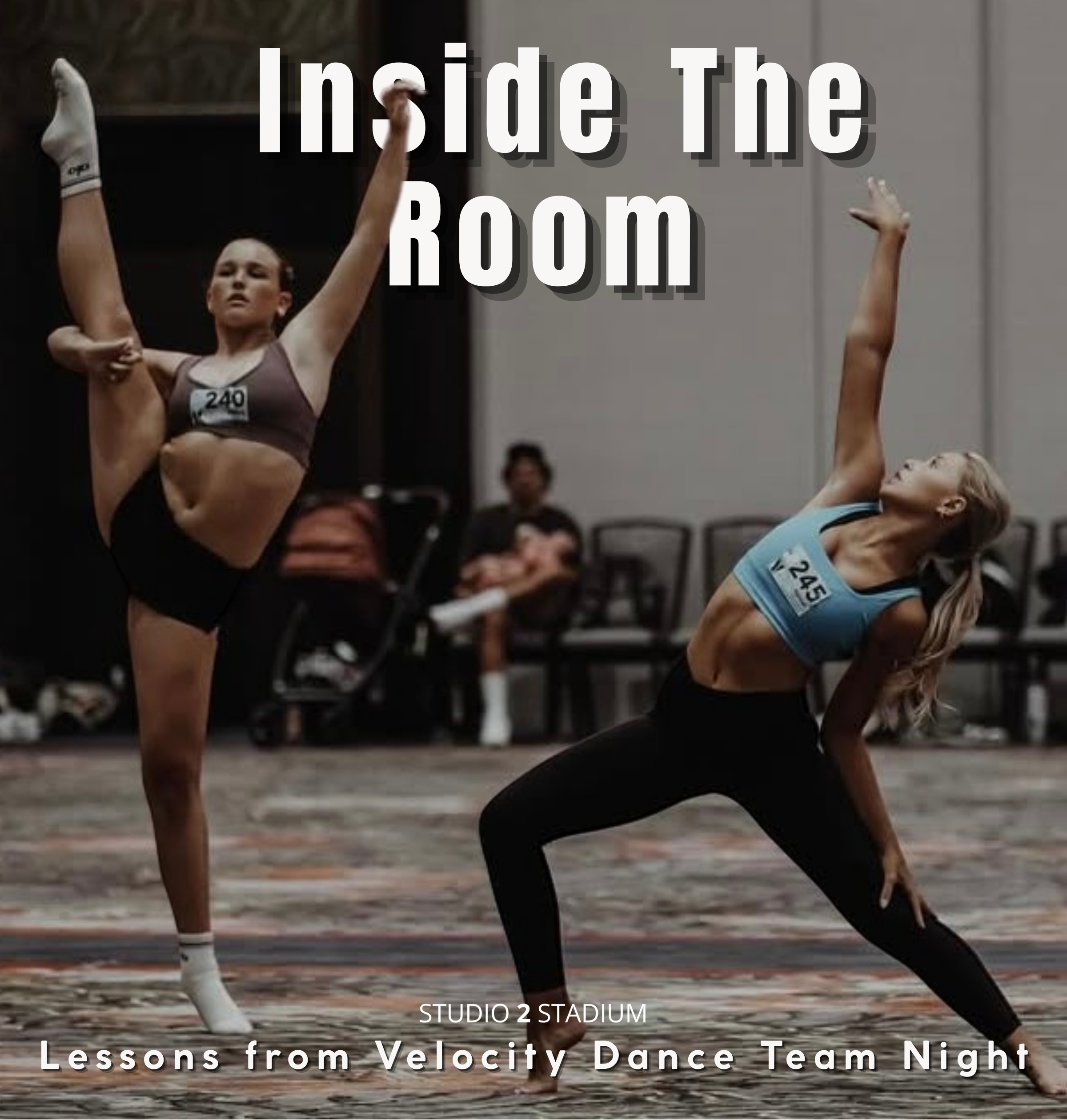
Velocity Dance Team Night brought together dancers, choreographers, and college programs in one dynamic space and being behind the scenes gave me a unique window into how dancers show up when the stakes feel real.
While I wasn’t coaching or judging, I was in the room watching closely. I paid attention to what made dancers catch coaches’ eyes and what held others back. Events like this are more than just a chance to learn choreography or meet programs — they’re a chance to be seen in ways that go beyond your skills.
Here’s what I noticed and what dancers can take with them into future events.
Don’t Camp in One Spot
One of the simplest mistakes? Staying in the same area the entire night. Coaches were scattered across the front of the room, and dancers who never moved around may have only performed in front of one or two sets of eyes.
⭐️ Pro Tip: Be aware of your placement. If you’re dancing multiple times, switch up your location to give yourself visibility from different angles — it’s a subtle but strategic move.
Improv is Part of the Evaluation
Before a single count of eight is taught, the music drops for improv — and in those moments, dancers start to separate themselves. It’s not about tricks or having the “perfect” freestyle. It’s about intention, energy, and the way you carry yourself.
⭐️ Pro Tip: Don’t treat improv as a throwaway. Start with purpose, finish with confidence, and know that coaches are already watching.
Step Up (Literally)
Some dancers chose to stand far in the back, even when there was space in front. Whether it was nerves or habit, it meant their faces and movement were harder to see.
⭐️ Pro Tip: If there’s room to take a step forward — do it. Especially during group runs, don’t be afraid to position yourself where you can truly be seen.
The Learning Process Is Being Watched Too
We often think “the performance” is the only thing being evaluated — but that’s not always true. During the learning process and practice rounds, many coaches were walking around the room and watching how dancers picked things up. The ones who stood out weren’t always the ones with perfect execution — they were the ones going full out, even while learning.
⭐️ Pro Tip: Treat the entire learning process like part of the audition. Full-out effort helps us notice you even more!
Warm Up Like a Pro
Another detail that stood out: some dancers didn’t warm up at all. They sat with friends until dancing started and jumped in cold — which not only increases risk of injury, but also makes it harder to perform confidently right away.
⭐️ Pro Tip: Give yourself a proper warm-up before dancing. Wake up your muscles and your mind — it makes a huge difference in how you show up from the start.
Eye Contact, Always
It might seem small, but eye contact during groups or improv helps create connection. It lets coaches see confidence. And at the end of class, taking the time to say “thank you” shows professionalism and maturity.
⭐️ Pro Tip: You never know who’s affiliated with a program. A choreographer, assistant, or helper could also be a coach or decision-maker. Treat everyone with respect and gratitude.
Match the Style, Not Just the Steps
The choreography taught leaned into team-based style — big shapes, synchronicity, and stylized transitions. The dancers who stood out weren’t just hitting the counts; they were adapting to the choreographer’s movement quality and paying attention to detail.
⭐️ Pro Tip: Watch the instructor closely. Match shapes, facings, and textures. The goal is to show that you can blend into a team’s aesthetic, not just execute on your own.
The Details Are What Stay With Us
No one expects perfection at events like these. What matters is how you carry yourself, how you adapt, and how you handle the small moments because those are often what coaches remember most.
Conventions, combines, intensives — they’re all opportunities to grow, to be seen, and to prepare for what’s ahead. If you walk into each one with a clear intention and awareness of how you’re presenting yourself, you’re already setting yourself apart.