Set Yourself Up for Success: Practices to Set Intentions & Crush Goals in the New Year
Set intentional goals this year with practical tools that actually stick. This blog walks through choosing a Word of the Year, creating a vision board, celebrating daily wins, and simple weekly systems to stay motivated and on track — all backed by research and mindset strategies. Perfect for dancers, parents, and coaches focused on growth.
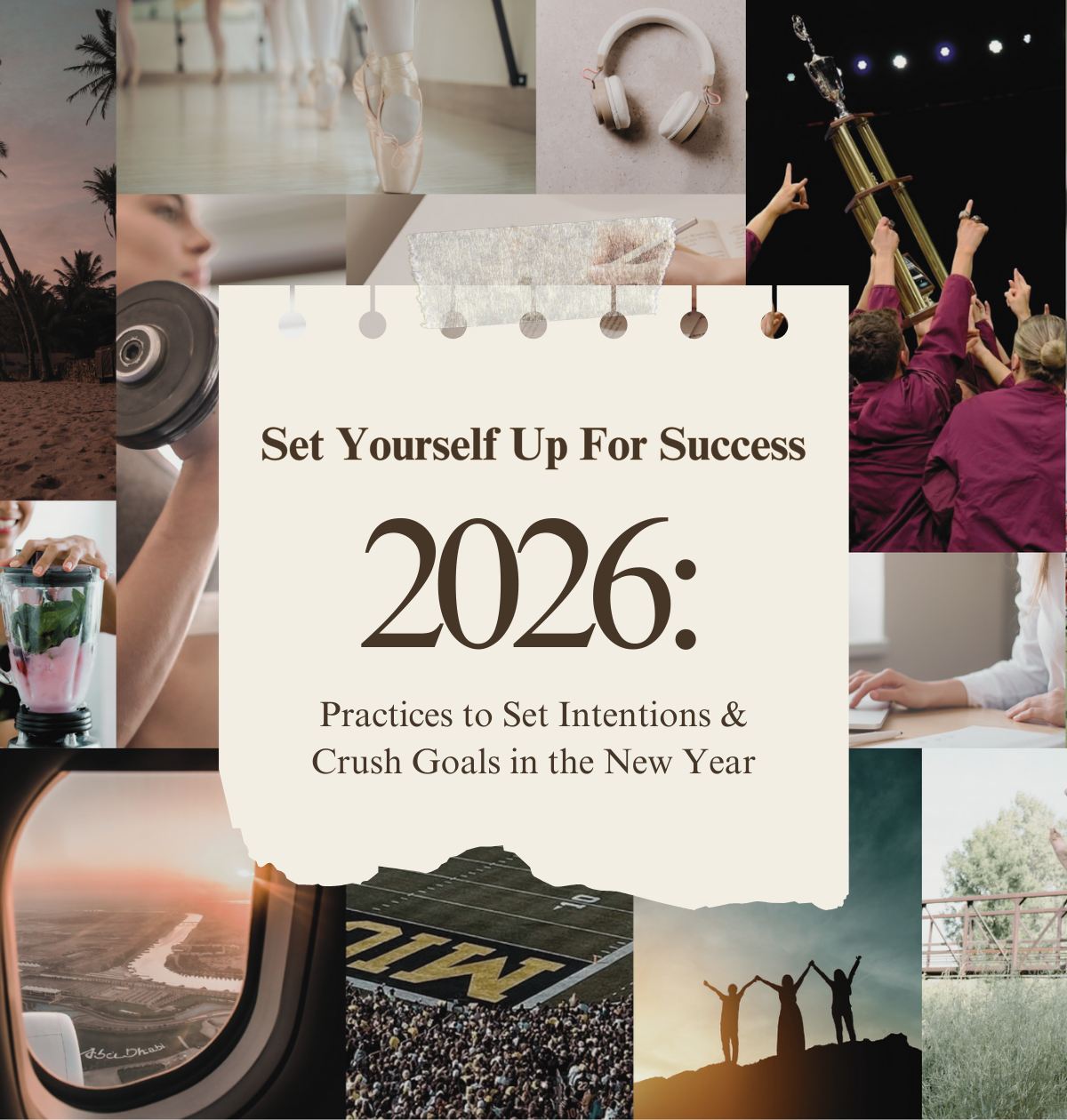
As the year begins, it’s easy to want change, but harder to sustain it. That’s why intentional practices matter. Instead of resolutions that fade by February, this year choose purposeful tools that help you stay motivated, focused, and accountable all year long. We’ve pulled together some of our favorite practices backed by psychology, goal-setting research, and real-world effectiveness.
1. Pick One Word to Represent Your Year
Instead of creating a long list of resolutions, choose a single word that will guide your decisions and intentions for the year. This word becomes your mental anchor, something you return to when life gets busy, unclear, or overwhelming.
📌 Why it works
Research shows that having a focal concept or theme can shape your thinking and behavior by reinforcing neural pathways related to goals and habits. Choosing a “word of the year” helps you focus your attention, clarify your priorities, and make consistent decisions that align with what matters most to you.
💡 Examples of words you might choose:
Growth
Consistency
Courage
Present
Leader
Balance
Instead of vague, overwhelming goals, your word becomes a daily filter:
“Does this decision help me grow this year?”
“Is this choice aligned with courage?”
This mental cue makes it easier to stay aligned with your goals when motivation dips.
2. Create a Vision Board You’ll Actually Use
A vision board isn’t a trendy collage, it’s a visual representation of your goals and values.
📌 Why it works
Vision boards enhance motivation, clarify what you want, and help your brain visualize success, which primes you to take actions toward it. Research shows that visualizing goals activates similar pathways in the brain as taking action, making aspirations feel more real and attainable. Prevention First+1
How to make your vision board
Gather images, photos, words, and quotes that reflect what you want to achieve this year.
Include images that represent both the outcome and the process (e.g., practicing, planning, training, not just trophies).
Put your board where you’ll see it every day. Your bedroom wall, locker, or even your phone lock screen
Revisit and refresh it regularly as your goals evolve.
Your vision board becomes a daily reminder of your ambitions and keeps your brain focused on them, especially when life gets hectic.
Our Vision Board Example:

3. Daily Spotlights: Celebrate Small Wins
Success isn’t just about the big moments, it’s about progress. That’s where daily spotlights come in.
How it works
Every day, write down one small win. Something you accomplished, learned, or overcame. Put that note in a jar, folder or even in your notes app.
💡 This could be:
You signed up for a new class.
You learned a new skill.
You showed up even when it was hard.
You asked for feedback.
At any point, whether before a big event, audition, or at the end of the year, open the jar and see just how much you’ve moved forward. This practice boosts motivation, reinforces progress, and often reignites momentum when you feel stuck.
📌 Why this works
Reflecting on wins, even small ones, activates a sense of accomplishment and positive momentum. Psychologists emphasize that reflecting on progress, no matter how small, keeps your motivation and confidence high and reduces burnout. Dr. Sarah Allen Counseling
4. Track Weekly or Monthly Progress
Goals don’t stay alive on wishful thinking alone, they thrive on tracking and reflection. Here are two more tangible ways to stay on track:
A. Weekly Check-Ins
At the end of each week, take 10–15 minutes to reflect:
What did I accomplish this week?
What helped me make progress?
What got in my way?
What’s my focus for next week?
Weekly reviews give you clarity, help you adjust your plan, and make goals feel more reachable instead of overwhelming.
💡 Pro tip: Pair your weekly check-ins with your vision board, it strengthens the connection between what you see and what you do.
B. Quarterly Milestones
Break the year into quarters and set meaningful milestones for each period. For bigger goals, this helps you keep momentum in chunks that feel manageable.
📌 Why quarterly goals?
Large goals can feel distant. Quarterly milestones give you checkpoints to celebrate, adjust, and stay motivated. Each quarter becomes a mini-goal cycle, preventing burnout and keeping the focus sharp.
5. Bonus: Gratitude & Reflection Journal
Another powerful habit is keeping a gratitude or reflection journal. This isn’t just about goals, it’s about mindset.
Research in positive psychology shows that regularly documenting gratitude is linked to increased optimism, resilience, and progress toward goals.
Each night you might write:
Three things I’m grateful for today
One challenge I overcame
One thing I learned
This builds positive habits, reduces stress, and keeps you grounded in why you’re pursuing your goals.
Setting intentions for the year isn’t a one-day ritual, it’s a journey. But with the right tools you’ll build momentum, stay aligned with your values, and grow in ways that matter.
Remember: Progress happens one step at a time.
Start with intention. Stay with consistency. Celebrate EVERYTHING in between.