The Interview Round: What Every Dancer Needs to Know
Most college dance team auditions include an interview round and it can be the deciding factor. This guide breaks down how to prepare, common questions to expect, and practical strategies to help dancers communicate with confidence. Strong technique gets you noticed, but strong interview skills help you earn the spot.
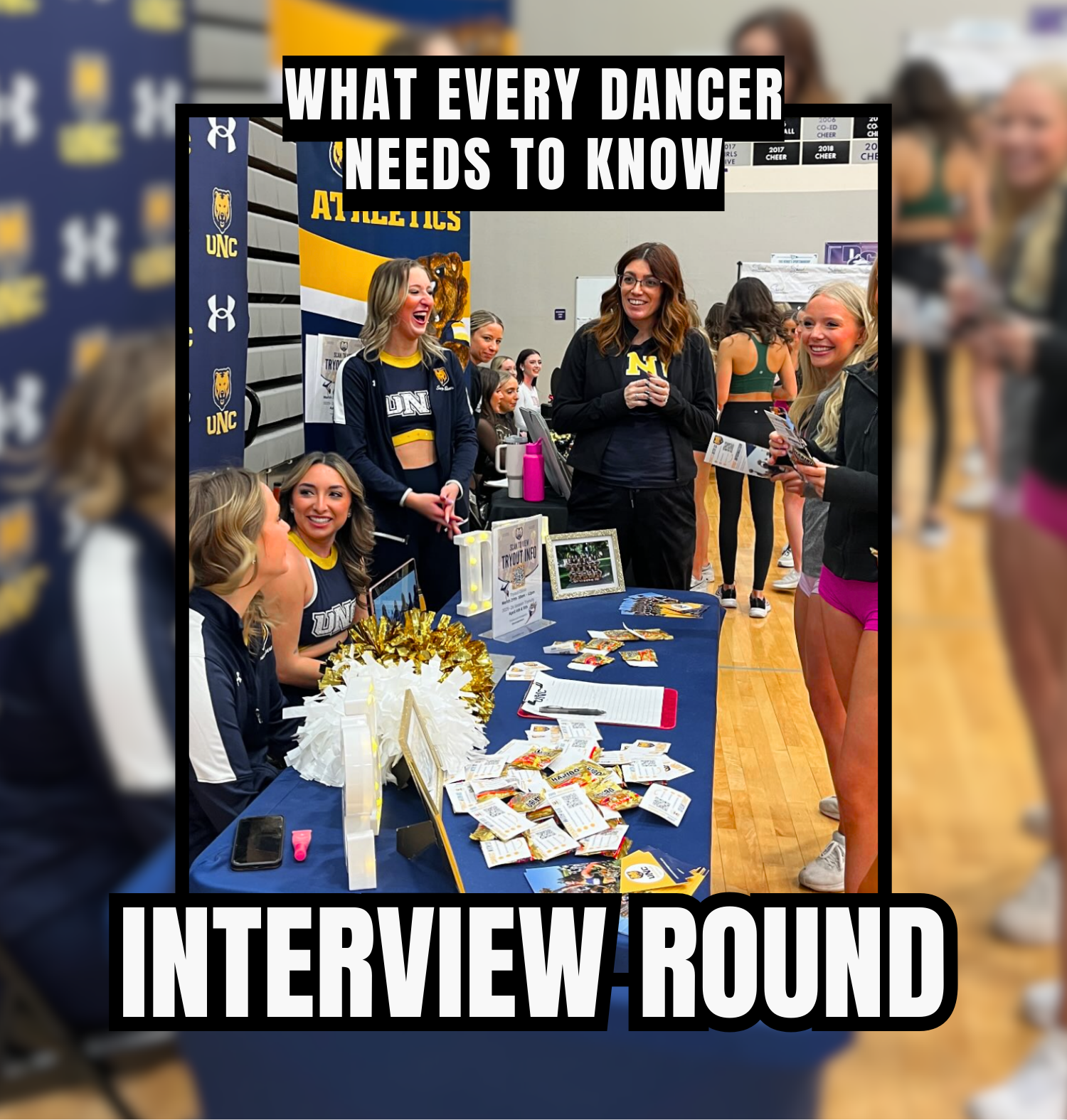
When dancers think about auditions, they usually picture technique, across the floor and learning choreography. But here’s the reality: most college dance team auditions include an interview round.
And interviews are not second nature.
You can train for years, but if you haven’t practiced speaking about yourself, your goals, and your experiences, it can feel awkward or intimidating. The dancers who stand out aren’t just strong performers, they’re strong communicators.
Preparing for your dance team interview is just as important as perfecting your technique.
Why the Interview Matters
Coaches aren’t just selecting strong dancers. They’re selecting:
Teammates
Leaders
Representatives of their university
Athletes who can handle feedback
How to Practice:
Ask a parent to interview you.
Have a teacher run a mock interview.
Practice with a friend.
Record yourself and watch it back.
Say your answers out loud. That’s where the real growth happens.
Interview Tips
✔️ Maintain eye contact to show confidence and engagement.
✔️ Be clear and concise in your responses. Avoid rambling.
✔️ Keep it conversational. It should feel like a discussion, not a speech.
✔️ Support answers with examples. Stories are more powerful than vague statements.
✔️ Smile. Energy translates, even in interviews.
Common Interview Questions (And What They’re Really Asking)
Below are sample questions you should practice, along with what the panel is truly evaluating.
1. Tell us about yourself and your dance background.
They’re looking for:
Confidence
Communication skills
Your training history
Your personality
Tip: Keep it structured — where you started, how you’ve grown, and what shaped you as a dancer.
2. Why do you want to be a part of this dance team?
They’re looking for:
Specific interest in their program
Research and preparation
Cultural fit
This is where preparation separates serious candidates from casual ones. Mention:
Their game day presence
Community involvement
Style
Alumni success
Program values
3. How do you handle constructive criticism?
They’re evaluating:
Coachability
Emotional maturity
Growth mindset
Strong answer structure:
Brief example
What feedback you received
How you applied it
The result
4. Describe a time you faced a challenge and how you overcame it.
They’re looking for:
Resilience
Accountability
Problem-solving
Avoid blaming others. Focus on what you did.
5. What qualities make you a strong team member?
They want:
Self-awareness
Team-first mentality
Examples might include:
Reliability
Positive attitude
Adaptability
Encouragement of others
Back it up with an example or story.
6. How do you balance dance with academics and other responsibilities?
College dance teams are demanding.
Programs want to know:
Are you organized?
Can you manage your time?
Will you stay eligible academically?
Talk about:
Scheduling systems
Communication habits
Prioritization strategies
7. What do you know about our program, and why are you a good fit?
This question separates prepared dancers from unprepared ones.
Research:
Their social media
Their recent performances
Coaching staff philosophy
Game day culture
Then connect your strengths directly to what they value.
8. How do you prepare mentally and physically for an audition or performance?
They’re evaluating:
Professionalism
Self-awareness
Preparation habits
Talk about:
Cross-training
Visualization
Sleep and recovery
Mental focus strategies
9. Share an example of how you’ve shown leadership.
Leadership isn’t always about being captain.
It could be:
Encouraging teammates during tough practices
Organizing the team calendar
Mentoring younger dancers
Leading by example during conditioning
Helping rhinestone teammates uniforms
Having a tough but mature conversation with your coach or teammates
10. What are your long-term goals?
This isn’t a trick question.
They want to know:
Do you have direction?
Do you think beyond the next performance?
Your answer doesn’t have to be perfectly defined but it should show ambition and thoughtfulness.
How to Refine Your Answers
After practicing, ask yourself:
Did I ramble?
Did I provide a specific example?
Did I sound confident?
Did my personality show?
Would I want to put myself on my team?
The strongest candidates are prepared and authentic. You can nail every technical requirement and still lose your spot in the interview room. Preparation is what allows those qualities to come through. Practice intentionally and get comfortable speaking about yourself.
Because when you walk into that interview room, your voice matters just as much as your dancing.