The Power of Checking In: How One Simple System Improved Team Culture
Transform your team culture using a simple monthly Google Forms check-in system to create safer communication, better support, and stronger connections with dancers. This practical guide shares the questions and strategies that make checking in sustainable and impactful.
In my final year coaching college dance, I knew something needed to shift.
I had always wanted to check in with my dancers regularly—to understand how they were doing beyond just their performance. One year, I tried doing quick in-person check-ins before practice, thinking it would help me stay more connected. But the reality was, it just wasn’t sustainable. Between the demands of practice prep and everything else on my plate, it took over a month to get through everyone. By the time I had my last check-in, things had already changed for that dancer. It just wasn’t effective.
So I pivoted.
Instead of trying to squeeze it into already packed practices, I created a monthly digital check-in system using Google Forms. It became one of the most valuable things I implemented during my time coaching.
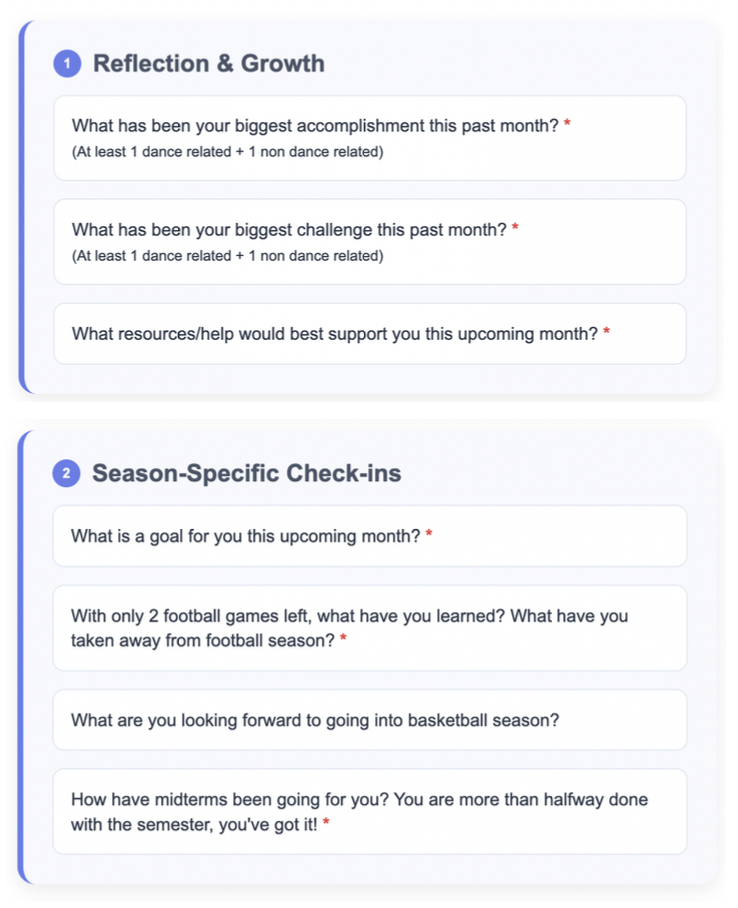
Each month, dancers filled out a short form with a few prompts tailored to what we were going through at that point in the season. For example, during Nationals prep, they’d respond to questions like:
“What are you most excited about?”
“What are you most nervous about?”
“How is your physical health? Any injuries or tweaks I need to know about?”
“Do you have any team bonding suggestions?”
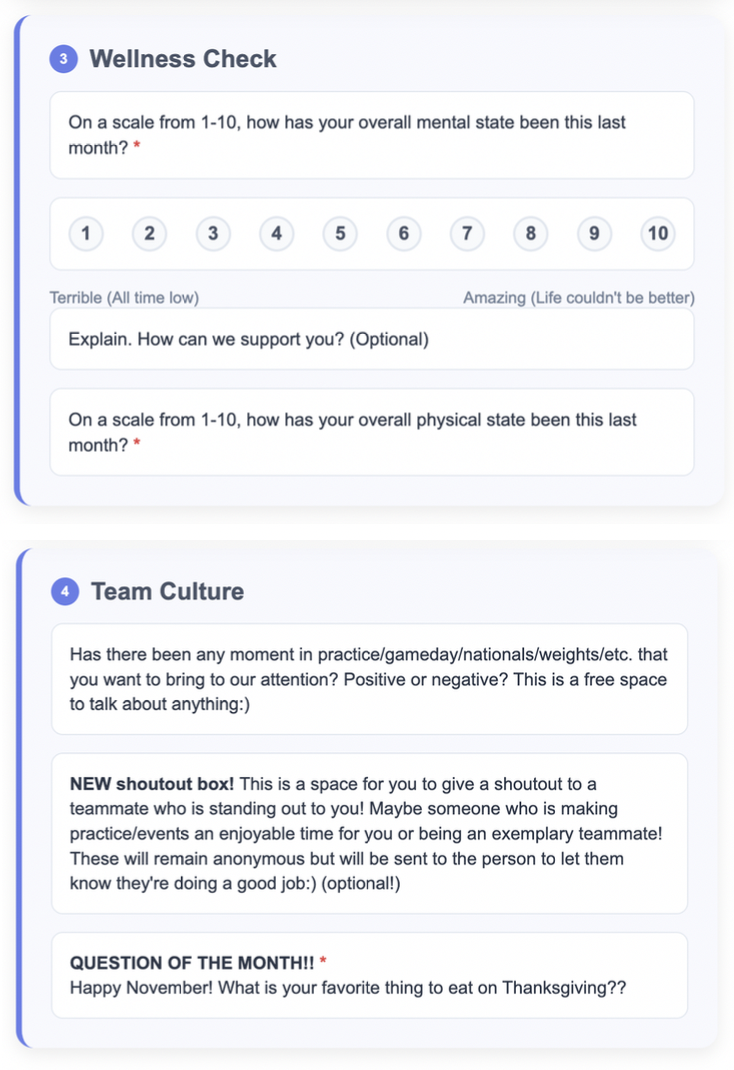
They also rated their mental health on a 1–10 scale, and had the option to share anything they were dealing with—whether it was school pressure, personal life, or just general stress. They could also let us know how we could support them.
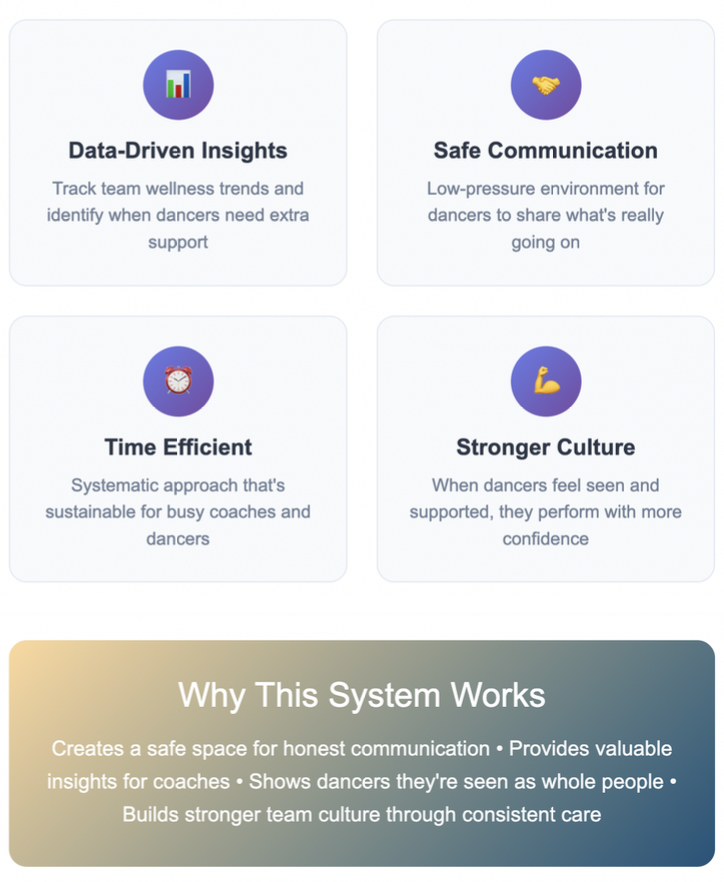
Here’s why this worked:
It gave dancers a safe, low-pressure space to open up without the vulnerability of a face-to-face conversation.
It allowed me, as a coach, to recognize patterns or shifts in mood or behavior, and follow up with those who might need a little more support.
It gave me context. When someone seemed “off” at practice, I wasn’t left guessing—I had insight into what might be going on.
It created team-wide visibility. Using the form’s built-in data summaries, I could see trends in team wellness and make adjustments to our environment, intensity, or approach when needed.
And for coaches who feel like they don’t have time to create new forms every month? Here’s a tip: delegate it. Assign a responsible dancer to create the monthly form. To protect anonymity, give each dancer a unique number that only you know.
This system didn’t replace personal connection—it actually enhanced it. It gave me clarity on when and how to show up for my dancers in a way that felt meaningful.
Sometimes, we get so caught up in our to-do lists and timelines that we forget the most important part of coaching: the people in front of us. This simple tool helped me slow down, listen better, and lead more intentionally.
Takeaway
You don’t need hours of extra time or fancy systems to check in with your team—you just need consistency and care. When dancers feel seen and supported as people, they perform with more confidence, resilience, and trust. Strong culture doesn’t happen by accident. It starts with relationships—and those relationships are built one check-in at a time.
EXAMPLE QUESTIONNAIRE