Understanding the Different Departments Collegiate Dance Teams Fall Under
Where a college dance team “lives” on campus impacts funding, scholarships, resources, and expectations. This guide breaks down the different department structures so dancers and parents can make informed recruiting decisions
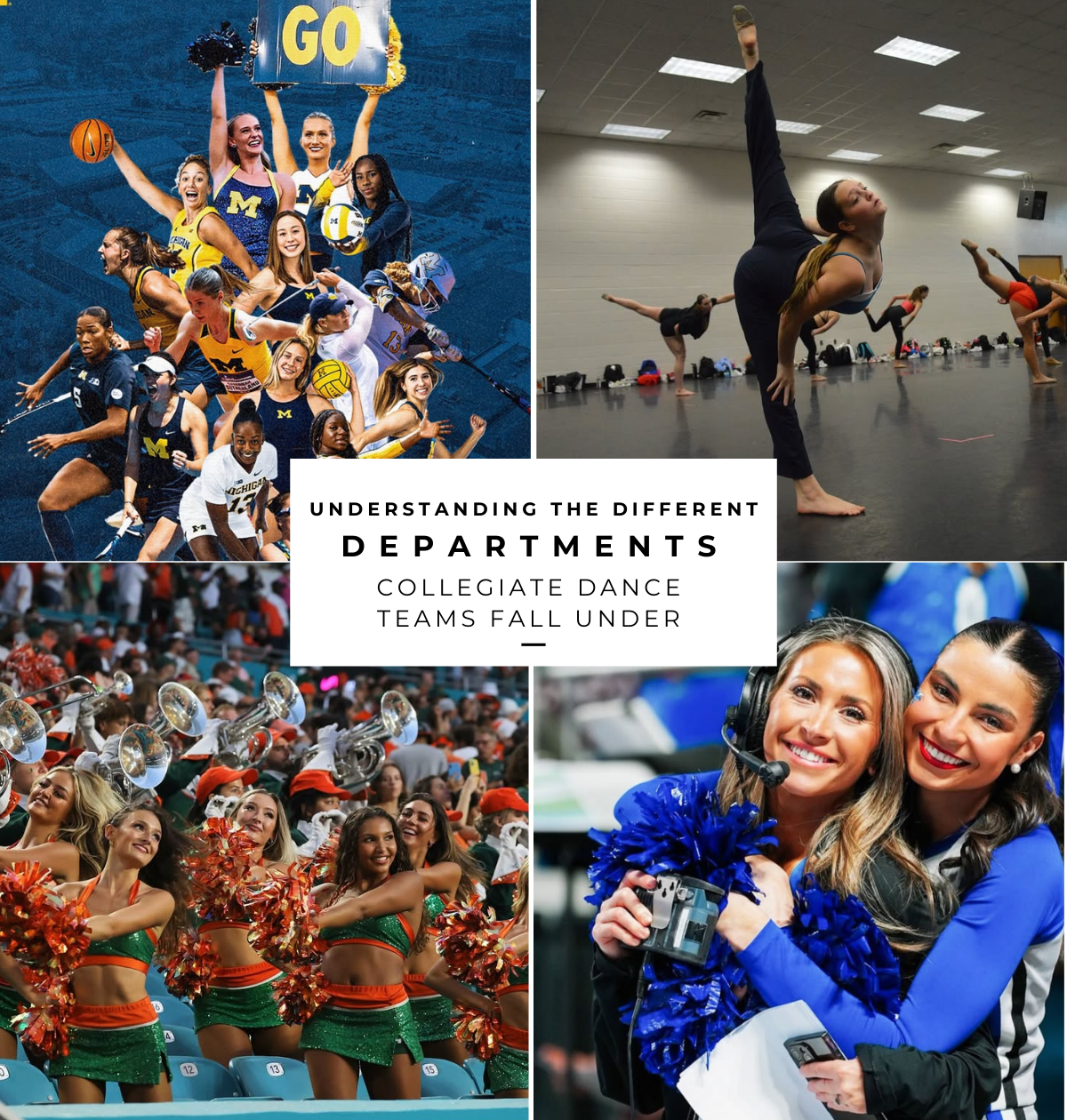
One of the biggest misconceptions in collegiate dance recruiting is that all college dance teams operate the same way.
Two schools may both advertise a “University Dance Team,” yet their funding, oversight, expectations, and athlete experience can look completely different behind the scenes.
At Studio 2 Stadium, transparency is one of our core pillars. It’s not enough to know a team exists, you need to understand how it functions.
Because where a team “lives” on campus directly shapes your experience.
Why Department Placement Matters
The department overseeing a dance team affects:
How the program is funded
Whether scholarships are available
Access to athletic trainers and strength staff
Practice schedules and time demands
Game day and competition expectations
Out-of-pocket costs
Recruiting structure
Who makes final decisions
Before committing to a school, dancers should understand who the coach reports to and how the program fits into the university system. Below are the most common structures you’ll see.
1. Athletic Department
In this model, the dance team operates within the university’s athletic department — alongside sports like football, basketball, and volleyball.
Oversight & Leadership
The coach reports to an Athletic Director or Assistant AD
The team may be classified as varsity
Dance often sits within a full spirit program (dance, cheer, mascot)
Some schools operate dance-only programs under athletics
Funding & Resources
Teams under athletics may receive:
Department-funded travel
Access to athletic trainers
Strength and conditioning programs
Sports medicine services
Structured budgeting and compliance oversight
However, funding is typically shared across all spirit programs. Dance does not always control its own independent budget.
What This Means for Dancers
Clear performance standards tied to game day and competition
Defined expectations for conduct and representation
Administrative support built into the department
It does not automatically mean:
Full scholarships
Unlimited budgets
Higher competitive ranking
It simply means the program operates within the athletic framework, and decisions are made at the department level.
Examples
University of Michigan
University of Colorado Boulder
University of Minnesota
University of Washington
2. Club Sports
Club teams are officially recognized by the university but operate outside of the Athletic Department. They are typically housed within Campus Recreation or Student Affairs.
Oversight & Leadership
Can be student-run or coach-led
Receive administrative support from recreational sports offices
Operate independently from varsity athletics
Funding Model
Limited institutional funding
Membership dues are common
Fundraising plays a major role
More flexibility to secure outside sponsorships
Club teams often control how they allocate their own budget.
What This Means for Dancers
Greater autonomy in operations
Leadership opportunities for athletes
Potentially higher out-of-pocket costs
Inconsistent access to athletic trainers
Practice space may depend on facility availability
Club does not mean low-level. At large universities with elite varsity dance teams, club programs often exist as a second or third option.
Examples of schools where club teams operate alongside strong athletic programs include:
Ohio State University
Michigan State University
University of Oregon
Texas Christian University (Elite)
3. Marching Band (“Traditional” Spirit Model)
In this structure, the dance team falls under the marching band program.
This traditional model groups together:
Dance
Cheer
Mascot
Twirl
Flag and guard
Oversight & Expectations
The Band Director oversees the program
Budget flows through the band
Dancers often attend additional rehearsals with the band
Football game day performance is the primary focus
What This Means for Dancers
Strong emphasis on tradition and precision
Structured, cohesive sideline production
Scheduling that revolves around band commitments
Competition participation varies by school
This model prioritizes performance integration with the marching band rather than athletic department alignment.
Examples
University of Arizona
University of Miami (Hurricanettes)
Purdue University (Goldusters)
Tulane University (Shockwave Dance Team)
4. Student Activities / Marketing / Admissions
Some dance teams function primarily as brand ambassadors for the university.
They are often housed within:
Student Activities
Marketing
Admissions
Event Planning
Primary Role
These teams focus heavily on:
Promotional appearances
Alumni events
Community outreach
University visibility
Game day may still be included, but competition is not always a primary focus.
What This Means for Dancers
Emphasis on professionalism and representation
Strong involvement in campus engagement
Limited athletic department resources
Performance responsibilities tied to branding goals
Examples
Colorado State University
Grand Canyon University
Middle Tennessee State University
5. Dance Departments (Rare)
In rare cases, a spirit team may be connected to an academic Dance Department.
Characteristics
Strong artistic or concert dance emphasis
Integration with academic coursework
Less focus on athletics or football game day
This structure is uncommon for traditional spirit teams but does exist in select cases.
Questions Every Dancer Should Ask
Before committing, ask:
What department oversees the team?
Who does the coach report to?
Is funding shared with other spirit programs?
Are scholarships offered?
What resources are guaranteed (trainers, strength, travel)?
What are the out-of-pocket costs?
Is this the primary dance team on campus?
If I could no longer dance, would I still choose this school?
Structure shapes experience.
The Bigger Picture
There is no universal model for collegiate dance. Two teams can look identical on social media and function completely differently operationally. That’s why centralized, transparent information matters.
At Studio 2 Stadium, we believe dancers should make decisions based on clarity, not assumptions. When you understand how a program operates structurally, you can align your financial expectations, training goals, and long-term plans accordingly.
And that’s how you choose the right fit, not just the right logo.